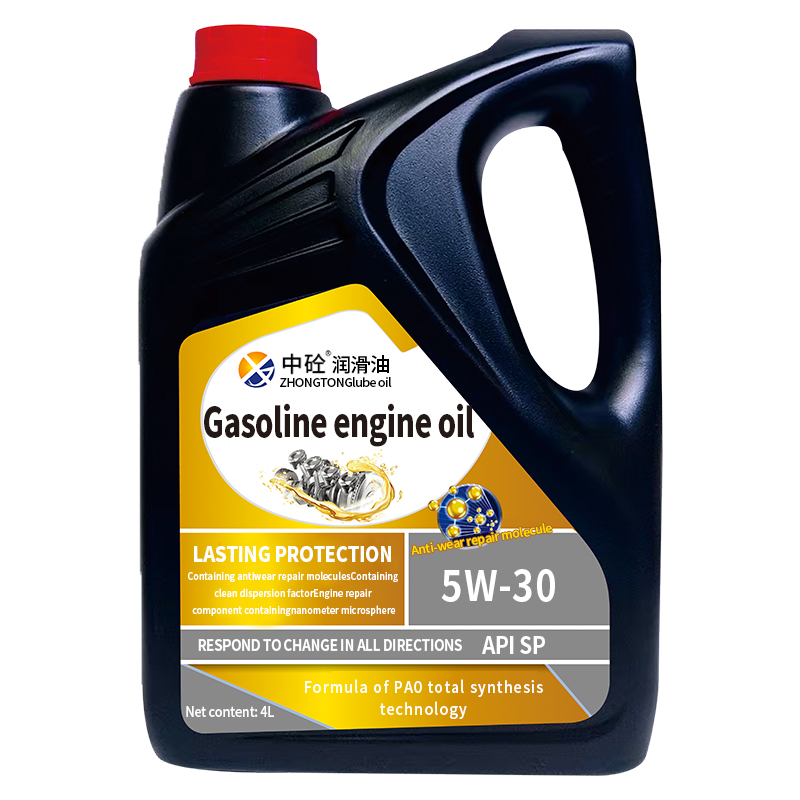
Automobile engine oil
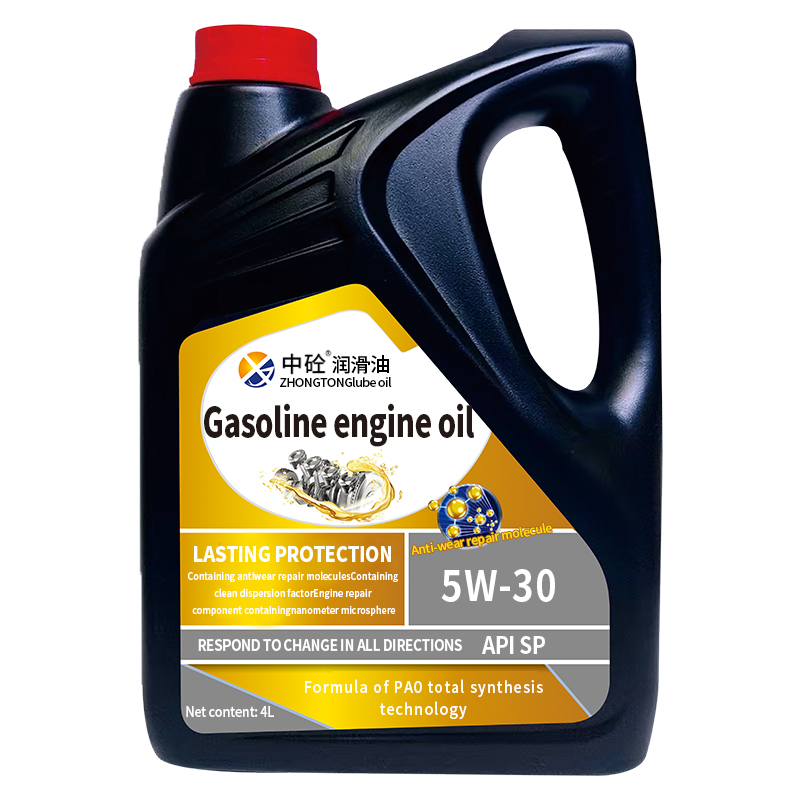
Automobile engine oil API SP 5W-30 4L*6
API SP 5W-30 is a high-performance engine oil, in which "API SP" means that the engine oil meets the SP quality grade standard formulated by american petroleum institute (API), which is one of the highest quality grades in the current API standard, and "5W-30" means the viscosity grade of the engine oil.
0$
Features
There are five characteristics: 1. Resistance to low-speed early combustion; 2. Strong oxidation resistance; 3. Good fluidity at low temperature; 4. Good cleaning performance; 5. Good fuel economy.
Application
Scope of application: It is suitable for many types of vehicles, especially vehicles equipped with turbocharged direct injection (TGDI) engines, such as Toyota, Honda, GM, Ford and many other brands, and also suitable for hybrid vehicles. In terms of emission standards: vehicles that meet the emission standards of National VI and below can meet the dual requirements of modern cars for environmental protection and engine protection.
Technical Data Sheet
| Quality index and test method |
| Low temperature dynamic viscosity | Boundary pumping viscosity | Kinematic viscosity at 100℃ | High temperature and high shear viscosity | Flash point (opening)℃ | Pour point℃ |
| 6600(-35℃) | 60000(-40℃) | 5.6~<9.3 | 2.6 | 200 | -40 |
|
6600(-35℃) |
60000(-40℃) |
9.3~<12.5 |
2.9 | 200 |
-40 |
|
6600(-35℃) |
60000(-40℃) |
12.5~<16.3 |
2.9 | 200 |
-40 |
|
6600(-35℃) |
60000(-40℃) |
16.3~<21.9 |
3.7 | 200 |
-40 |
| 6600(-30℃) |
60000(-35℃) |
5.6~<9.3 | 2.6 |
200 |
-35 |
|
6600(-30℃) |
60000(-35℃) |
9.3~<12.5 |
2.9 |
200 |
-35 |
|
6600(-30℃) |
60000(-35℃) |
12.5~<16.3 |
2.9 |
200 |
-35 |
|
6600(-30℃) |
60000(-35℃) |
16.3~<21.9 |
3.7 |
200 |
-35 |
| 7000(-25℃) |
60000(-30℃) |
9.3~<12.5 | 2.9 | 205 | -30 |
|
7000(-25℃) |
60000(-30℃) |
12.5~<16.3 | 2.9 |
205 |
-30 |
|
7000(-25℃) |
60000(-30℃) |
16.3~<21.9 | 3.7 |
205 |
-30 |
|
7000(-20℃) |
60000(-25℃) |
9.3~<12.5 |
2.9 | 215 | -23 |
|
7000(-20℃) |
60000(-25℃) |
12.5~<16.3 |
3.7 |
215 |
-23 |
|
7000(-20℃) |
60000(-25℃) |
16.3~<21.9 |
3.7 |
215 |
-23 |
| 9500(-15℃) |
60000(-20℃) |
12.5~<16.3 |
3.7 |
215 |
-18 |
|
9500(-15℃) |
60000(-20℃) |
16.3~<21.9 |
3.7 |
215 |
-18 |
Grease Usage Notice
Pay attention to the safety of storage and use: it should be stored at room temperature and sealed to avoid moisture and mechanical impurities. When using, make sure that the engine and replacement parts are fully cooled to avoid contact with the skin. If it is accidentally contacted, it should be cleaned in time. At the same time, the waste liquid should be properly treated and not dumped in soil and water.
Package